
The 90-second jump habit for men over 45
August 12, 2026
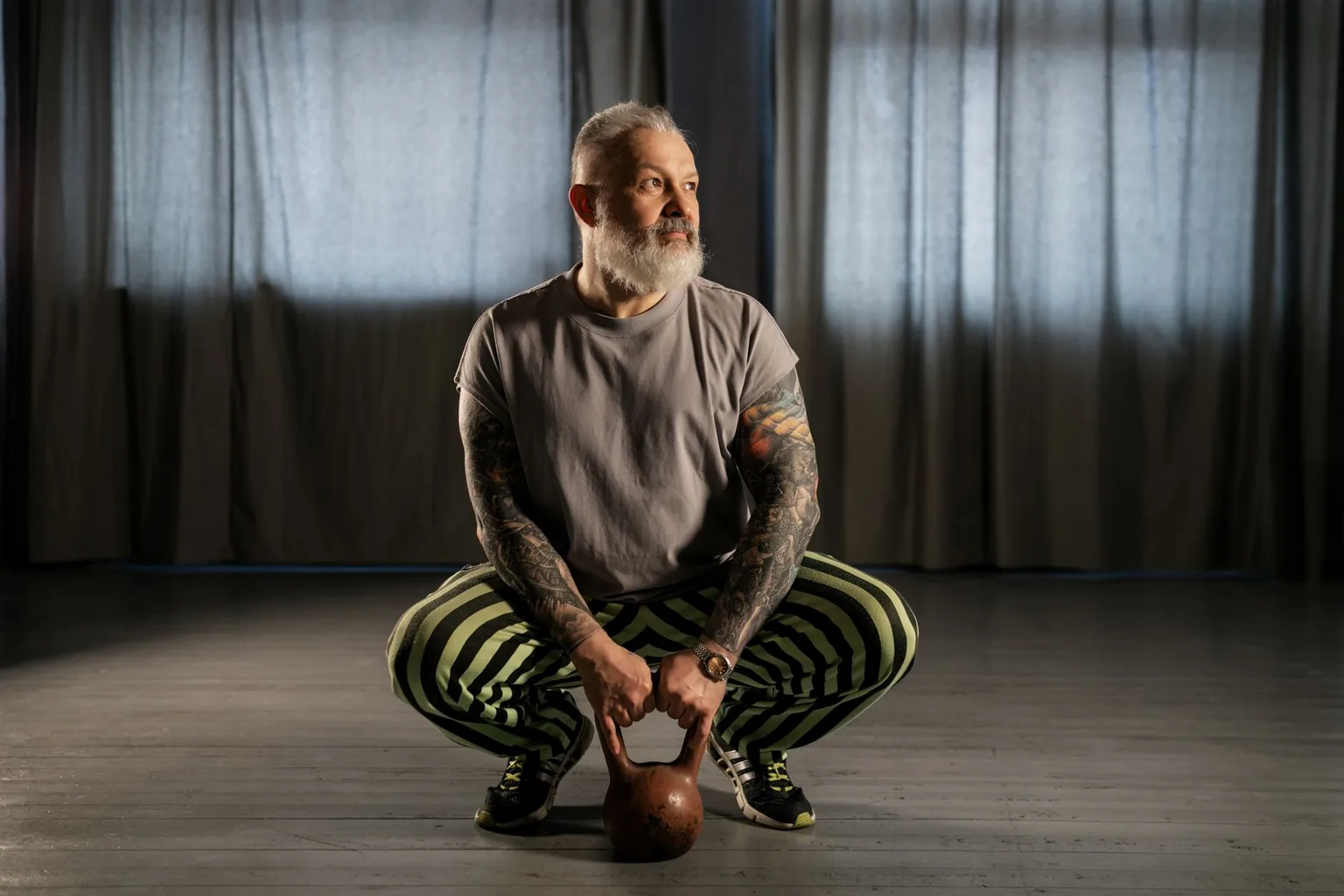
Most men over 45 have not jumped on purpose in decades. Running for a bus, hopping off a step, landing from a small drop: the quick, springy movements quietly leave the week once sport does.
Lifting covers the heavy work. What it rarely covers is short, sharp ground contact: landing tall, absorbing it, and going again. That is a trainable skill, and the dose it needs is small.
This post covers what the habit is, how to do it in ninety seconds, and how to keep it going. One boundary up front: this is training, not medical advice. If you have a bone, joint or heart condition, or a doctor has told you to avoid impact, check with them before adding jumps.
Where the habit fits with lifting
The lifting days do the heavy work: squats, hinges, presses, rows and loaded carries, two to four times a week (/blog/two-days-done-beats-five-days-planned).
The 90 seconds fills a different gap: quick, light, springy contacts on any day, including rest days. It takes no equipment, no warm-up beyond a few steps, and almost nothing from your recovery budget.
The 90-second addition
Once a day, on any day, including rest days: a short burst of deliberate, light landings. The version that sticks is simple - small jumps, done briefly and consistently. Not box jumps, not anything athletic. Step off a low step and land tall, or do a few gentle two-foot hops in place. Thirty to fifty contacts, a minute and a half, done.
The point is the quality of each contact, not the volume. A few crisp, separated landings a day keep the skill sharp; a long, sloppy set does not.
If jumping is off the table, the alternative is brisk heel drops: rise onto your toes and let your heels land firmly, or march hard in place. Firm contact, tall posture, brief. If you have a health condition, pain, or a doctor's advice about impact, follow that advice over this article.
The 90 seconds, exactly
Pick one: ten small two-foot hops, or ten step-offs from a bottom stair, landing quietly and tall. Rest a few seconds between contacts - separated, crisp landings beat a blur.
Do three rounds. Total time, including the rests, is about 90 seconds. Do it in the kitchen while the kettle heats. Shoes optional, enthusiasm optional, consistency not optional.
Land like you mean it but not like you are angry: stiff and tall, not collapsing, not stomping. If anything hurts, stop. Pain is a question for a qualified professional, not something to train through.
Where to start, depending on where you stand
New to jumping: start with step-offs or heel drops, and let the lifting handle the heavy work.
A health condition, a diagnosis, or a doctor's advice about impact: talk to your doctor or a physical therapist before adding jumps, and follow their guidance on what is right for you. This post is training, not medical advice.
Already training but never jump: you are most of the way there. Add the daily 90 seconds, and check that your program includes loaded carries and squats alongside it. The program's joint-friendly versions are in the guide (/guide).
Slow is not nothing
Ninety seconds a day will not feel like much, which is exactly why people quit small habits. Judge it the way you judge any deposit habit: not by the daily balance, but by whether it is still happening months from now.
The man who starts at 48 barely notices it at 49. What he notices later is that hopping off a step or jogging for a train still feels normal, because he never stopped practicing it. That is the whole game, and it costs 90 seconds.
Ninety seconds, one year later
Zoom out on the habit's economics. Ninety seconds a day is about nine hours across an entire year - less than a single weekend. Few habits in the program cost less to keep.
And the habit scales with everything else in this program: same philosophy as the smallest jumps (/blog/the-smallest-jumps-available) and the two-day week (/blog/two-days-done-beats-five-days-planned). Tiny, sustainable, compounding. Like the strength account (/blog/muscle-is-the-retirement-account), it is built from deposits so small you cannot fail at them.
Why this habit and not another
Of everything in this program, the 90 seconds is the easiest to skip because it feels like nothing - no sweat, no soreness, no proof. That is exactly why it needs the trigger and the streak. Treat it like brushing teeth: not a workout, not negotiable, attached to something that already happens daily.
The men who keep it for years are never the ones with the best intentions. They are the ones who picked a trigger on day one - the kettle, the coffee, the toothbrush - and let the anchor do the remembering. The habit only works if it happens, and the trigger is what makes it happen daily.
Do this today
Do the first round right now: ten small hops or ten step-offs, tall and quiet. That is the first deposit of the day.
Then set the trigger: kettle, coffee, or the moment you brush your teeth. Small habits die without a trigger. The lifting side of the equation - the squats, hinges, and carries that do the heavy work - is laid out in the complete guide (/guide).
Start your first two weeks this week.
Full workouts, check-ins, workouts that adjust to you. Free - no card required.
Start free