
Joint-friendly programming for the 45+ male client isn't a disclaimer - it's the exercise list
September 2, 2026
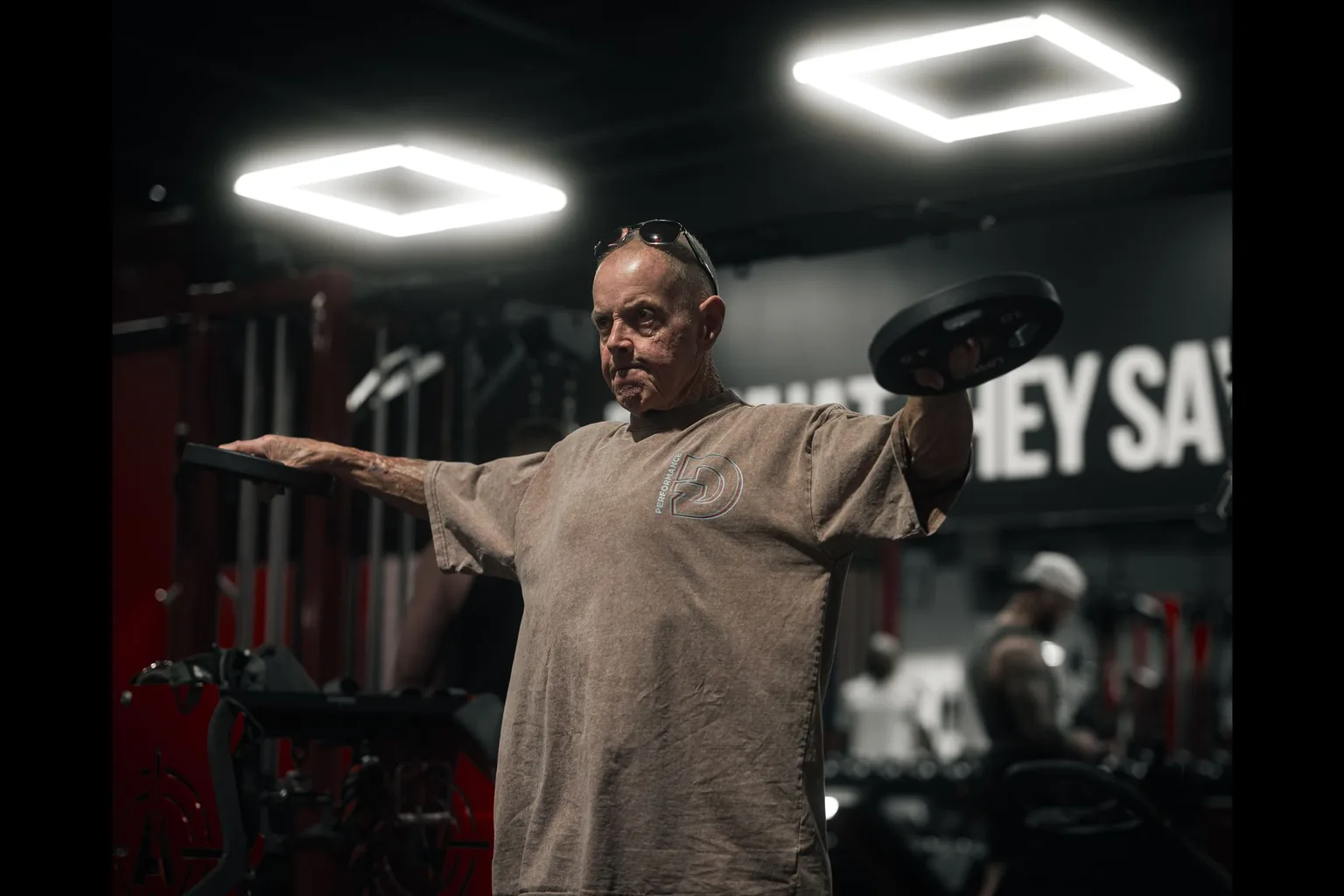
Every male client over 45 hands you the same intake inventory, whether he writes it down or not: the shoulder that barks at bench, the knee that votes against lunges, the lower back that files a complaint the morning after deadlifts.
The industry's two standard answers, push through it or stop doing that, both fail the client and eventually cost you the account. The third answer is a design philosophy: joint-friendly is not a watered-down program, it is the exercise list.
The swap logic, pattern by pattern
The principle to build the roster on: the pattern is non-negotiable, the tool is fully negotiable. Every client squats, hinges, pushes, pulls, and carries in some form, because those patterns are what strength after 45 is made of. But the barbell is one tool, not the pattern.
Squat pattern: if the back squat does not suit him, the goblet squat to a box trains the same legs with a simpler setup. Hinge: the trap bar centers the load around the body instead of in front of it, same muscles, different geometry; dumbbell Romanian deadlifts when even that does not suit. Push: neutral-grip dumbbells let the shoulder find its own path. Pull: rows and pulldowns are easy to set up well.
And the carry deserves its own line in every 45+ program: pick up something heavy, stand tall, walk. Grip, trunk and upper back, with almost no way to do it wrong. When a client is mid-swap everywhere else, carries keep the week honest.
Olympic lifts: out, with a power replacement
The sport lifts are magnificent athletic expressions with a terrible cost profile for a 45-year-old generalist: years of technique debt, high wrist and shoulder demand, and a learning curve that makes little sense outside competition.
The quality they train, producing force quickly, is still worth training, and there are simpler ways to do it. The friendly delivery: kettlebell swings, medicine-ball throws, and simply moving moderate loads with intent. Same adaptation, no technique debt. Both are learnable in a session and self-limiting: when form slips, the movement simply gets weaker, which suits this population's power work.
The three-step protocol when a joint complains anyway
Even a well-built program meets a grumpy joint eventually: an old injury flares, a golf weekend backfires, a knee wakes up wrong. The protocol has three moves, in order.
One, swap the tool within the pattern: box squat to a shorter range, leg press, split squat to a target. The pattern survives; only the exercise changes. Two, reduce the dose, never the pattern: same exercise, fewer sets, every set still stopped a couple of reps short. Three, and only if the joint demands it, park the pattern briefly and train around it, with a return date attached.
What the client never does is the old move: ignore it and grind through. Pain that is sharp, persistent or getting worse goes to a qualified professional; the coach's job is the programming around it.
Why this wins the retention math
Pushing through fails because the client stops trusting the program. Stopping entirely fails worse: the habit breaks, the strength he built drifts, and the client who stopped for two weeks is gone for six months.
The swap system keeps the training arriving while the exercise list flexes, and the original exercise often comes back into the plan later. The client never had a lost month, and you never had the awkward conversation about why he's paying to do less.
Coaching men 45+? Composite Athlete writes this program for every man on your roster, with a listed swap for every exercise, adjusted off his log, surfaced to you as a short review queue. One flat tier from $29/mo, athletes train free. compositeathlete.com/for-coaches
Start your first two weeks this week.
Full workouts, check-ins, workouts that adjust to you. Free - no card required.
Start free